


Filed under: Books, Mexico, Travel, USA | Tags: Born in Blod and Fire, Driving Mr. Albert, Mexico, The City in Mind, Travel, US
While I was in Guanajuato I was reading Born in Blood & Fire: A Concise History of Latin America

One such woman that stood out was Sor Juana Ines de la Cruz, who taught herself to read by three, taught herself Latin by ten, and was famous for her poetry by her late teens.
“finjamos que soy feliz
triste pensamiento, un rato
quiza podreis persuadirme
aunque yo se lo contrario”
pretend I’m happy
sad thought ()
maybe you can persuade me.
Even so, she was denied admission to University of Mexico (which opened 100 years before Harvard), in the mid 1600s. She was given two options, becoming a demure, respectable, doting wife, or become a nun. She choose the latter and became famous in Europe for her poetry, until at one point her superiors became worried about her fame and demanded she repent and act more like a woman. She had to sell her library, her instruments, and her writing tools, and repent for the sin of curiosity in the body of a woman.
It makes me wonder about how still, hundreds of years later women are subject to much more strict gender roles in most parts of the world. Many Korean women smoke, but won’t do it in public in their hometowns because it’s still seen as unladylike and unseemly. I’ve flustered many an Asian man when describing how I’ve travelled Asia, largely alone, just because I wanted to. In Guanajuato the matron of the guest house I was staying at loved looking through my camera at pictures of China and Mongolia. She commended my solo travels and said she wished she were my age now.
I was thinking about these things while having dinner alone in Guanajuato my first night there at a lovely place called Trunca 7 (I’m assuming this is named after Trunca – or the absurdly short street it is on.) I should have known that a place that made it into the tourist guide book for Mexico would be filled with just that. It felt a little less “decent” to be dining alone with a room full of foreigners than in a local hole in the wall place.
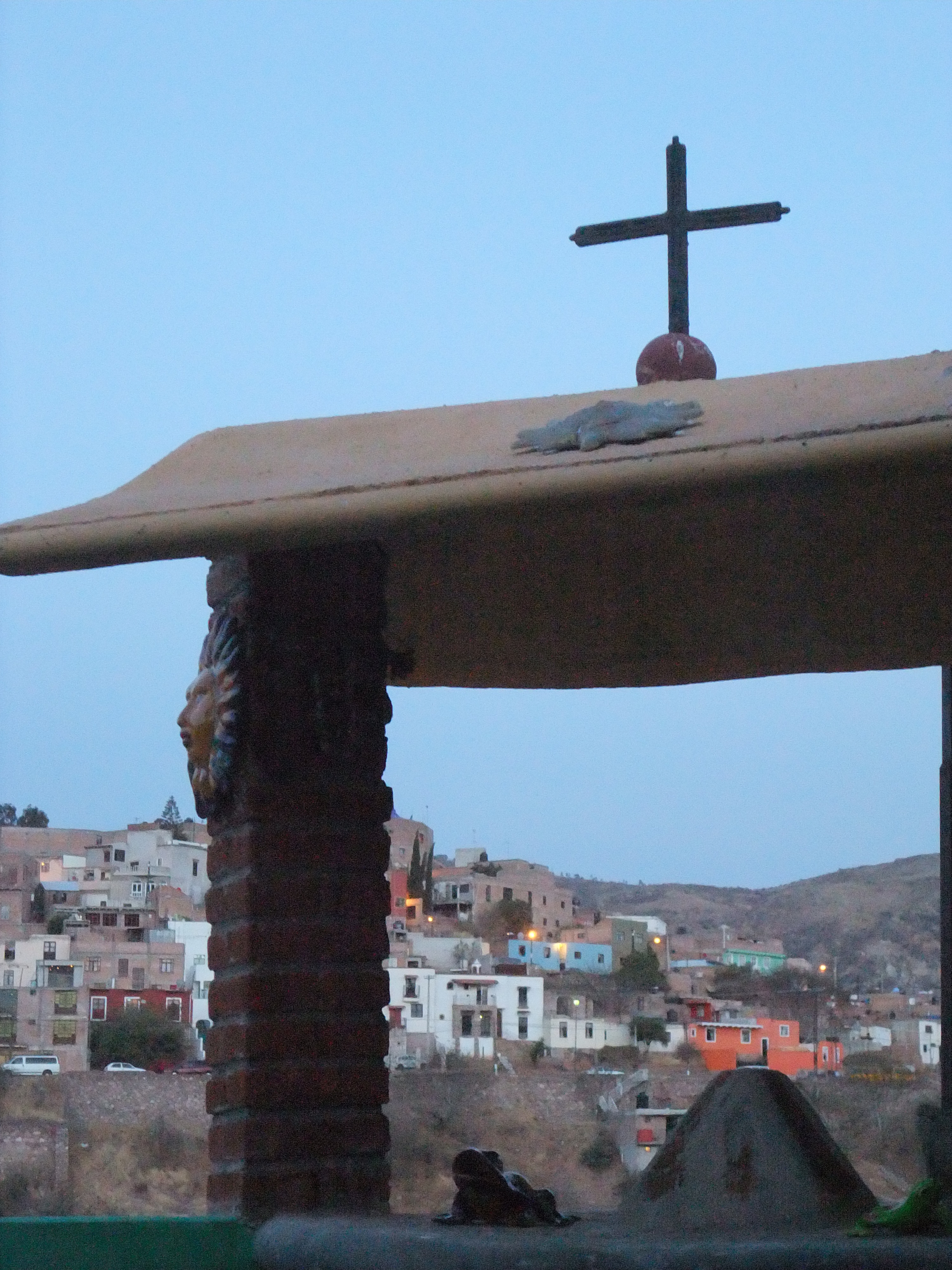
Guanajuato
Guanajuato has been the seat of many political and social uprisings in Mexican history. The main street (as are most main streets in Mexico) is named after Benito Juarez, the first liberal, and highly revered president of Mexico. He was indigenous Zapotec and didn’t learn Spanish until he was a teenager. A friend and contemporary of Abraham Lincoln and also famous for using dye to lighten his skin and to hide the fact that he was one of the few indigenous people to ever rise the ranks of Mexican politics.
There is something about the way the city is nestled in the mountains that creates an entire city filled with inspiration. Thinkers. Artists. Phenomenal architecture, but also a small touch of the haughty that pervades places frequented by tourists, especially those originally built by the wealthy. There are rumors of a town near here where the colonial French lived, and never mixed with the locals. There are apparently still to this day family lines without mixed blood, although they’ve lost French for Spanish and eat the current standard Mexican food. Every once in a while I see a Mexican man who could 100% pass for a tall, blond European, and I have to wonder if he didn’t wander down off that mountain.
After finishing Born in Blood and Fire, I started The City in Mind: Notes on the Urban Condition, a fantastic, if immensely negative look at some of the world’s most important cities and their urban development. There is a chapter on Mexico City and how it’s current incarnation isn’t the first time this area has risen to epic proportions of population and density, and also musing about if it will meet the same fate of disappearing for mysterious reasons. It is impossible to write an essay about Mexico city without talking about the slums, the pollution, and the utterly corrupt nature of the politicians and police that allow those two things to exist. Kunstler quotes a Mexican geographer to sum up Mexico city in one sentence, “The city is an urban disaster: the physical pollution is a product of the moral pollution of the Mexican political system.”
My favorite chapters in the book are his writings of the American cities: Atlanta, Las Vegas, and Boston. He rails on Atlanta as a failed attempt at creating an Edge City, where everything important moves away from the center into hubs of suburbia that absolutely require personal transportation. The result is a city that has no downtown to speak of, almost no walking streets, and ten hours of horrible traffic every day.
In a time when the bookstores are filled with books of positive messages, “ a year in the life of (fill in the blank with something probably completely useless)”, and mediocre novels that turn into bestsellers only because they can be read by anyone with a third grade education, I delved into this extremely well-written, unabashedly snarky and critical look at how some of the world’s biggest cities are failing to provide any semblance of quality of living.
My favorite chapter was on Las Vegas. Now, I need to preface that I’ve never been to Las Vegas, and although I have many friends who profess their love of it, and make a gambling run at least once a year, I have absolutely no desire to go there. Actually, the only person I know who has actually lived there is Mexican man who looks like he could be from that aforementioned French mountain. He enjoyed living there, but he had steady work of tearing down and rebuilding hotels until his work visa ran out, and said the place is just one giant, never-ending party. What’s not to like?
According to Kunslter, a lot:
“They say that Antarctica is the worst place on earth, but I believe that distinction belongs to Las Vegas….I’ve heard it touted as the American city of the future the prototype habitat for a society in which the old boundaries between work, leisure, entertainment, information, production, service, and acquisition dissolve, and a new exciting, colorful, pleasure-laden human meta-existence finds material expression in any wishful form the imagination might conjure out of an ever mutating blend of history, fantasy, electrosilicon alchemy and unfettered desire….As a tourist trap, it’s a metajoke. As a theosophical matter, it presents proof that we are a wicked people who deserve to be punished. In the historical context, it is the place where America’s spirit crawled off to die.”
It sounds like the second Back to the Future movie brought to life.
But it brings up the question of what American cities are trying to achieve outside of pure unfettered expansion, and what all capitalists are trying to ignore, that expansion for expansions sake can’t continue indefinitely without eventual failure (and huge amounts of unnecessary waste and use of resources). It also brings to mind another fact that I encounter every time I go home: America is no longer the top of the world in most anything. The standard of living hasn’t had any major changes, and health care has declined, education levels are slipping, technology lost it’s foothold to Asia long ago, and the architecture and infrastructure that make it so grand and appealing is crumbling due to lack of maintenance and funding. I am not the only one of my generation who makes a far better living as an ex-pat with visitation rights than as a full-time citizen. Gone are the days when Europe and the US were the only places to live to have access to a certain standard of living and modern technology.
Which brings me to the last book of note I’ve read recently, and one thing that I always pine for where ever I am – the great American road trip. The US would not be what it is today with Eisenhower and the highway system that allows anyone to get anywhere in the personal vehicle of their choice, status, and personality. I long for my electric blue Insight, even as the poor thing is on it’s very last legs and falling apart at the seams. I could go on about how the American landscape has been ruined by the chains of box stores that lie at the outskirts of every medium to major city – to the point where you could completely forget which state, never mind which city, you are on the outskirts of.
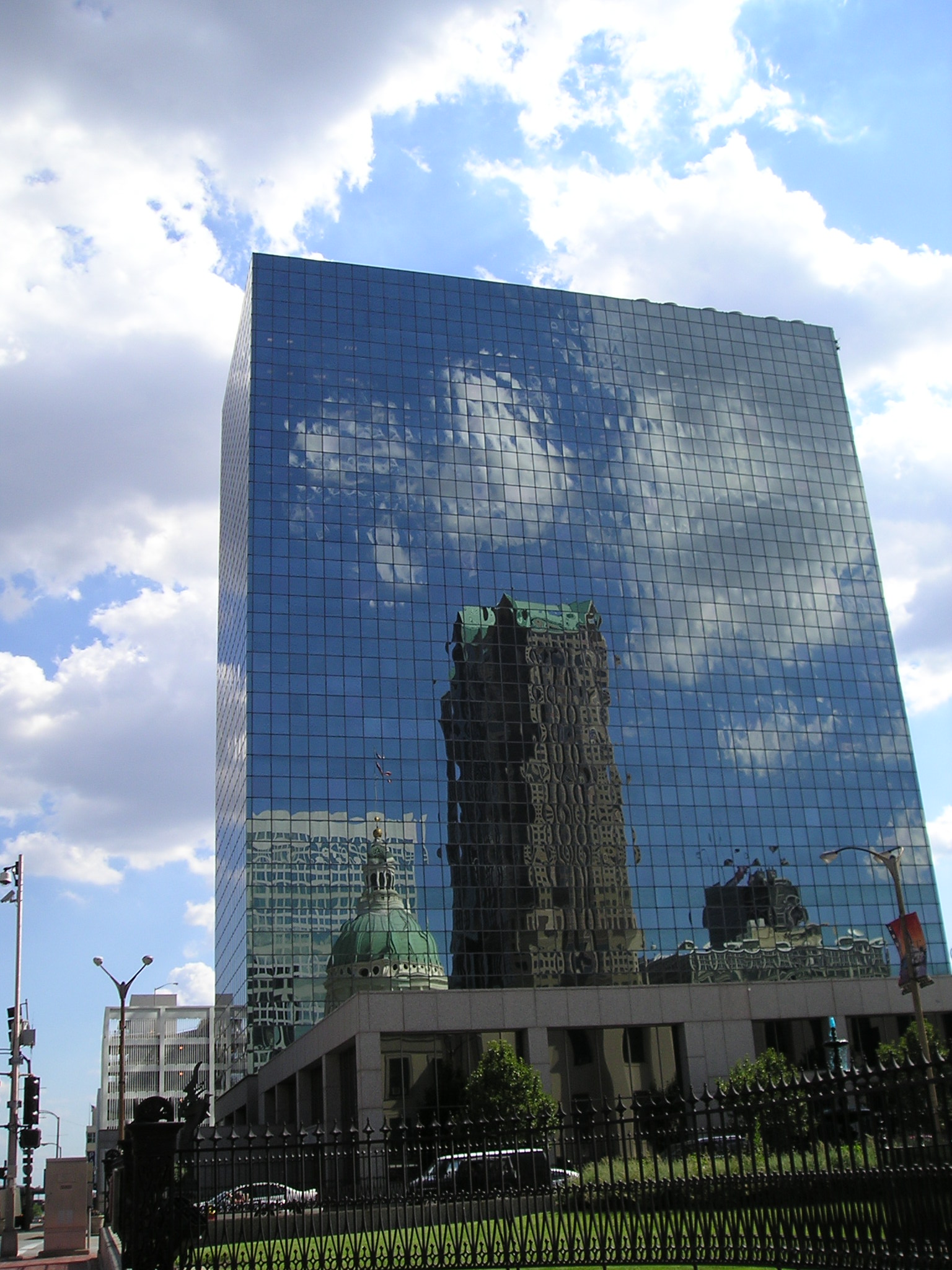

Driving Mr. Albert: A Trip Across America with Einstein’s Brain
For all of my travels across Asia, I have never made a complete road trip across the US. I’d love to, but of course, time and money are the essence of all travelling. And I’ve always said that the US is something I can see when I’m older and too tired to deal with the trials of travelling in places like Cambodia. But this book hit home with me, largely because the author lives in my home town of Portland, Maine. There have been a lot of these books popping up lately. Down the Nile: Alone in a Fisherman’s Skiff
I’m going home for the summer. Something I haven’t done for a long time. I don’t have any money. I’m not even sure how I’m going to get there. But I do have gigs lined up. A massive pile of books waiting for me at my mom’s house, and a few friends who are at least feigning happiness to see me. It’s time for at least the eastern half of that American road trip.
Notes from my travels, and help funding future ones: Fieldnotes From a Caravan
Filed under: Books

Year of the Flood by Margaret Atwood
Fantastic follow-up to Oryx and Crake. A book about two friends, one who devises a way to destroy the world, and the one who doesn’t believe he’ll really do it. This is the aftermath, and actually runs concurrently with the events in O&C.

Tender at the Bone by Ruth Reichl

Heaven’s Keep by William Krueger
Probably the weakest of the month. A simple mystery about a plane that goes missing in Heaven’s Keep mountain pass. It’s a good little mystery, but nothing groundbreaking.

Evolution of Shadows by Jason Quinn

The Underneath by Kathi Appelt
A brilliant and really sad child’s tale about kittens that loose their mother, and each other, and are trying to find their way back to whatever it is they could possibly call home.

The Secret Speech by Tom Robb Smith
Sequel to Child 44. Good, but not outstanding. More violence, less plot than the first.

Nanjing 1937 by Ye Zhaoyan

Life of PI by Yann Martel
This is the second time I’ve read this amazing little tale. It was this months choice for the literature class I’m teaching to a brilliant bunch of middle school girls. I got so much more out of it this time than the first time, and we had a great time hashing it up and finding symbolism in class.

The Lost City of Z by David Grann
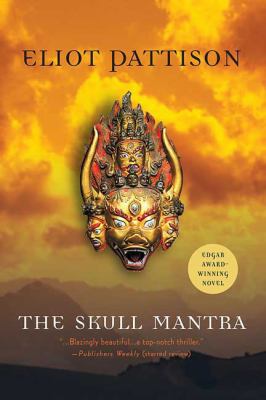
The Skull Mantra by Elliot Pattison
This is a fantastic cultural thriller set in Tibet.

The History of Love by Nicole Krauss

Pursuit by Luiz Garcia-Rosa
With no concrete plans for a weekend in the fist time in ages, I set out to do what ruby does best. Pick a subway stop or two and explore. On Saturday, I barely made it out of the front door before the first adventure began. There is a particularly seedy looking building in our neighborhood that, although it appears to have a Buddhist temple on top, I was a little hesitant to explore. The building itself is one of the more ranshackle in our area. There is a billiards hall on the second floor, and on my walk home from work, it’s one of the places that always has particularly drunk men loitering around outside.
But since I was in exploring mode, camera in hand, daring wits about me, I decided to brave it past the filthy stairwell to see what it really is.
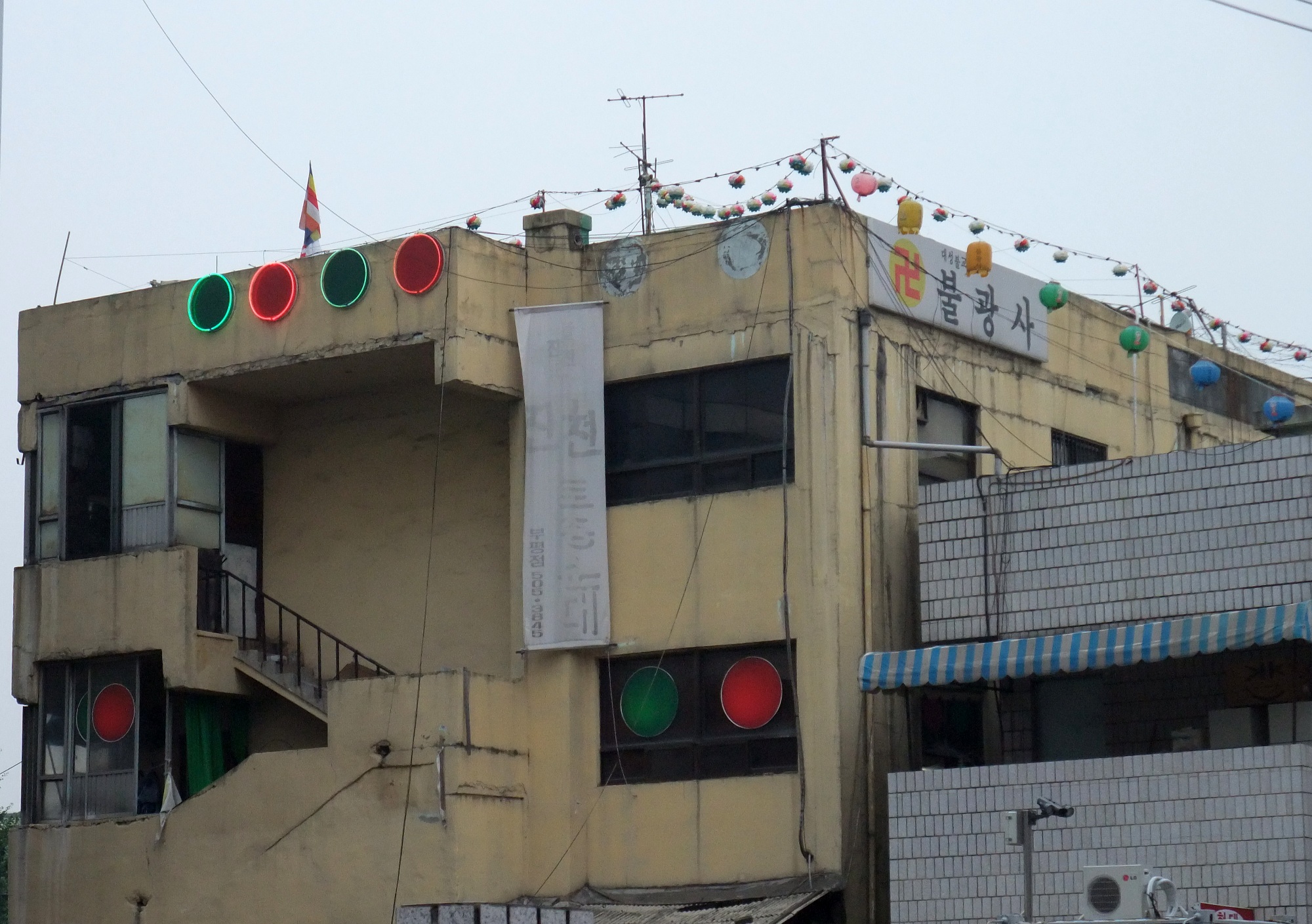
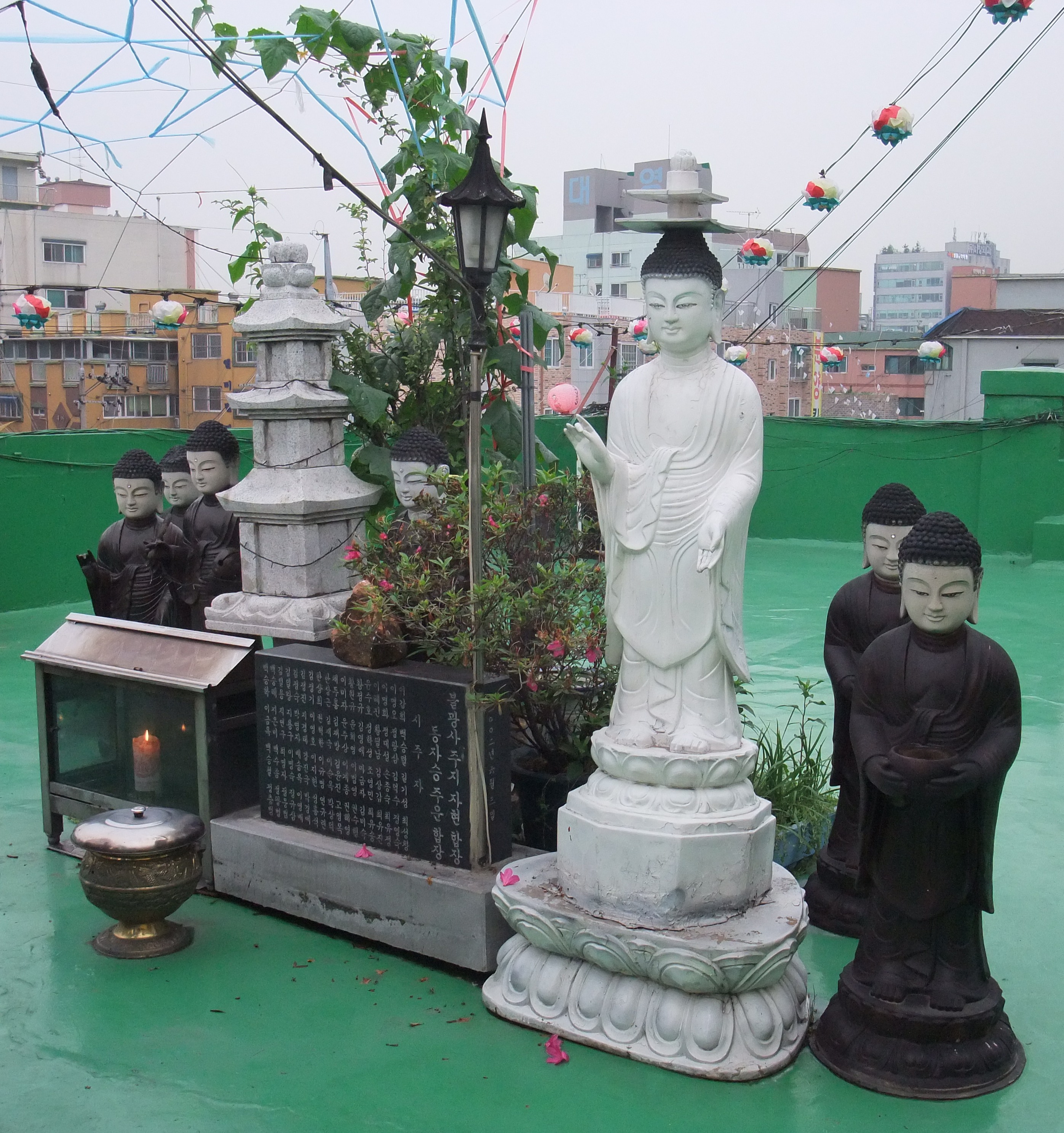
On the third floor is a beautiful shrine room. Even though part of the reason I came to back to Asia was to re-immerse myself in Buddhist culture, it doesn’t feel like part of everyday life here. Consumerism and an extreme materialism to the point of being disgusting has taken over, leaving the less than a third of the population that still even considers itself Buddhist on a shelf somewhere behind last years’ cellphones. There are still some great cultural holidays, and the occasional monk on the subway, but it doesn’t “feel” like a Buddhist country the way other places I’ve travelled do.
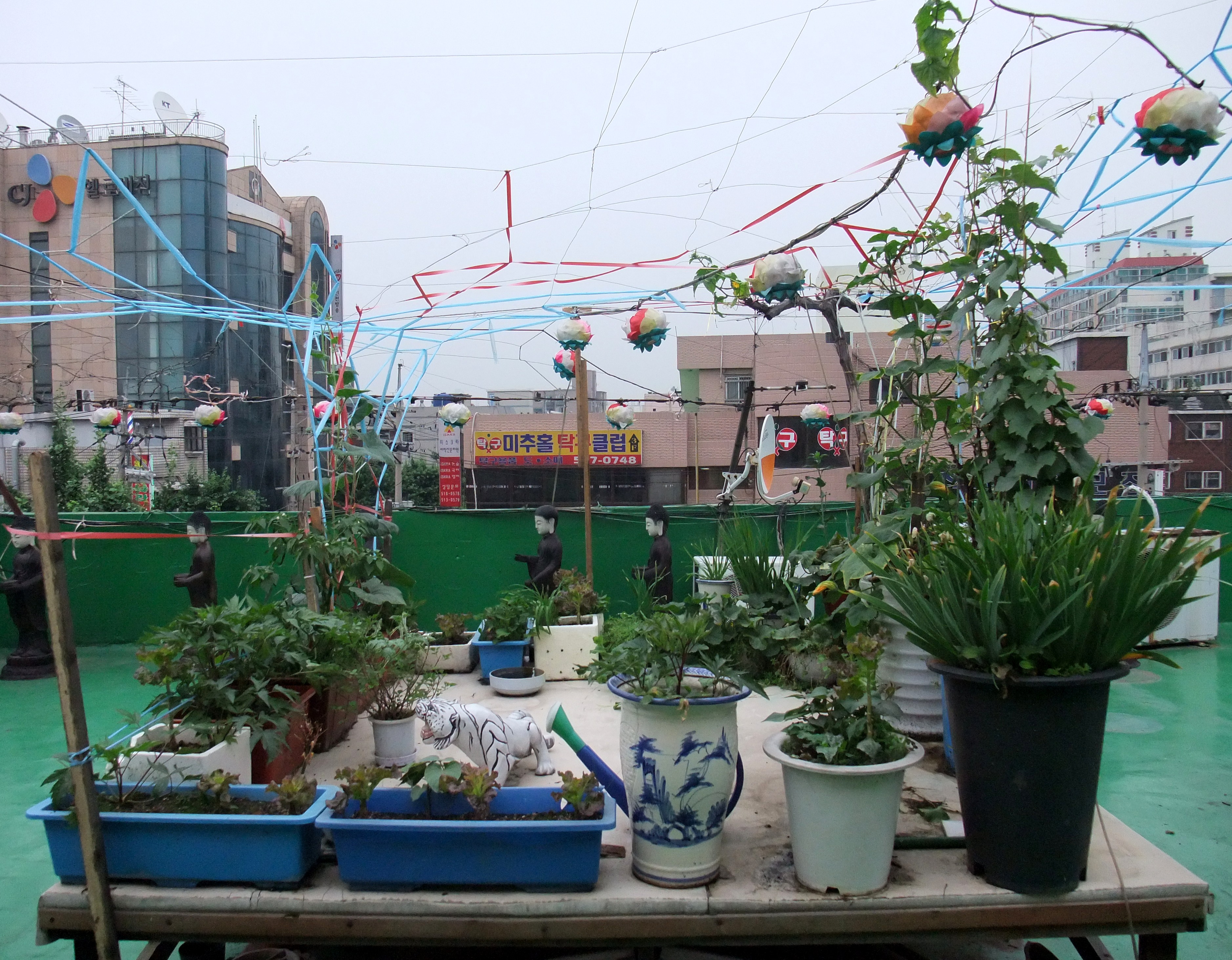
With no one around I did a few prostrations and sat for a few minutes, and then nosed around trying to find the rooftop shrine that I was pretty sure existed. On my way through the door to the rooftop I literally ran into a monk. He was at first shocked, and then pretty happy to see me. He even gave me a zucchini from their rooftop garden. I speak almost no Korean, and he speaks almost no English, but I did glean that he was in the Korean war from pictures he showed me and was quite happy to meet a young American.
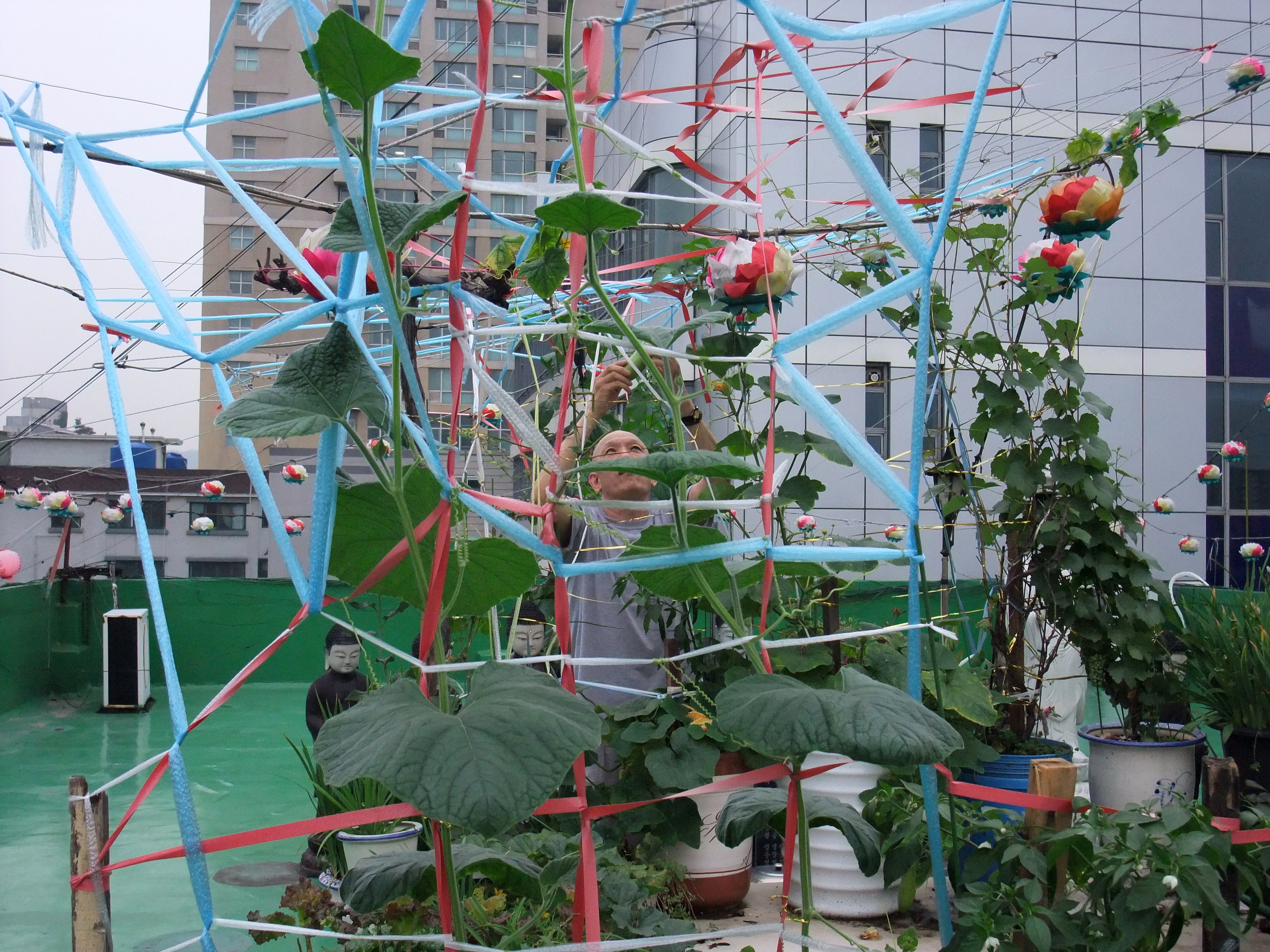
We had tea together and a gorgeous little girl full of smiles came in. As far as I could tell, she said the monk is her uncle, and it seems like she almost lives at the temple. I got to thinking how different my life in Korea would be if I had become involved with these people earlier in the year.
The rest of my subway hopping weekend paled in comparison to hanging out with the monk and his niece. Even with such promising names as Imhak, Beagun, and Dong Incheon, it’s a little bit of a disappointment to get off at any subway station and just see more of the same. I know this is going to happen already, but still, there’s usually one little gem that was worth finding. The Mexican restaurant in Songnea for example, or the acupuncturist I want to try again when they are open in Imhak.
After a second day of rambling and going to the grocery store, I was on the final stretch home carrying a bag full of exotic cheeses from Home Plus, when a little tiny hand grabbed my arm. It was the girl from the temple. It appears what I’ve been looking for in Korea has been on my street all along.
Filed under: Books

Shanghai Girls by Lisa See
Kindle Version


Paper Towns by John Green
Kindle Version

This might be my favorite of the month, and not just because the author has the same name as one of my favorite friends. Teen discomfort mixes with geography as a boy is taken on the ride of his life by the neighbor girl that he’s been in love with since elementary school. She takes advantage of his loyalty and drags him on a trip to get revenge on everyone she believes has ever crossed her from spray painting cars, leaving dead fish in dresser drawers, and shaving the football stars eyebrows off while he sleeps in his own house. The best thing about this book was the vivid geographical references to Florida, and the term “paper towns” fake places put on maps to trip up would be cartographic thieves.

Gods in Alabama
Kindle Version


Pillars of the Earth by Ken Follet
Kindle Version

I made it through this 1,000 page monstrosity in record time. Once I got into it, I couldn’t put it down. It’s not earth shattering, or mind blowing, but it is an intensely rendered, realistic world. And it’s getting turned into a mini-series.

This was supposed to be the second book for the masters literature class I’m teaching, but the classes got cancelled due to exams. I read the book anyway. It was good, but would have been really difficult for the students. There was a lot of implied meaning. Although the book was really engaging, the ending was just plain bizarre. Then again, it is translated from French.

The year in recap
January
February
March
April
May
Filed under: Books

The Girl with the Dragon Tattoo
Kindle Version

A Bookleaves bookclub selection. We tore it to pieces. Although I think everyone enjoyed the quick nature, and it was a good suspense, crime mystery, we really couldn’t see what the hoopla was. Also, at least to this quick witted group of feisty ladies, it seemed like the author was on a self-aggrandizing male-fantasy.


Rock, Paper, Scissors
Kindle Version

Anyone who has taught in Korea will understand why I found this title irresistible. Rock, Paper, Scissors is the ubiquitous problem solver for any conflict between students.


This was a delightful journey through remodeling a house in an unlikely location. Tuesday Teaser Post


This was a yet another fantastic historical fiction by Ghosh. Outlandish play with language, people bucking the chains of society way ahead of their time, and the chains people purposefully put on to get out of their current situation.

When You Are Engulfed in Flames
Kindle Version


Ella Minnow Pea
Kindle Version

I loved this book. I read it in one sitting at my favorite tea shop in Bupyeong, which I hadn’t gone to in ages. Chinese Pour tea, nice scenery, and a novel that couldn’t be more about the elusive nature of communication.

My Life in France
Kindle Version

Another Bookleaves choice. Another surprising winner.

The Battle of the Labryrinth
Kindle Version


Mrs. Frisby and the Rats of NIMH
I’m teaching a fantastic reading class for our advanced students. This was book #1, and I was estatic to revisit the book version of a cartoon I loved as a kid.


Filed under: Books

Ella Minnow Pea: A Novel in Letters

“Their offense? Each member in deliberate provocation of the High Island Council had marched single file into last Tuesday’s open session wearing cartoon masks and making loud duck sounds – sounds which any sentient Nollopian knows by now are forbidden – while holding aloft large cardboard containers of a certain recently outlawed brand of American oatmeal.”
– Ella Minnow Pea by Mark Dunn
I’m going to leave it up to Bybee to decide what has just been made illegal on the island of Nollop.
Tuesday Teasers are hosted by Should Be Reading.
Filed under: Books

“Whole families were out for an evening stroll – children riding on their fathers’ shoulders, boys playing vigorous games of soccer, people stopping to greet one another and chat in the warm night air. This was what living in a city without cars meant.” pg. 10 A House in Fez
by Suzanna Clarke
Interview with the author:
Video of some young westerners and the house they are living in:
Teaser Tuesdays is hosted by Should Be Reading.
Filed under: Books
Same as last month – only six books, although pretty good quality. I did not finish any of the book club books, but, on a positive note, I have switched to Better World Books for my book buying links, which means my international friends can now click on books with cheap shipping. This is generally a much better deal for the few folks who do buy books from my blog, but, let me tell you, the embedding is a hell of lot more difficult than Amazon or Powell’s.
 Clay: The History and Evolution of Humankind’s Relationship
 by Suzanne Stoubach
For a former archaeology tech, this book was a fantastic mix of history, humor, and showed clear signs of the kind of obsessive personality that makes a good archaeologist and historian.

Good Omens by Neil Gaiman and Terry Pratchett
Although I’m a fan of Gaiman, I’ve generally avoided Pratchett and the like. Although I do enjoy a good sci-fi or fantasty once in a while, I guess I’m kind of a snob about it. This was okay. Pretty funny, and I enjoyed the character of the young witch. Overall, I’m a little confused as to why it has reached the cult status that it has.

Hullabaloo in the Guava Orchard by Kiran Desai
If Good Omens is a parody of Armageddon, Hallabaloo is a parody of the Hindi Sadhu worship of India. A malcontent postal worker walk away from his job, and through a series of ridiculous events changes his life from the most lackluster of situations to becoming an aesthetic who sits in a tree commanding monkeys to do his bidding and telling fortunes. Somehow the population of the town never figures out that he knows everyone’s secrets because of his years of postal lobby gossip.

The Diving Bell and the Butterfly by Jean-Dominique Bauby
Kindle Version

I had no idea what this book was about when I picked it up. Somehow, I missed all the book and subsequent movie hype. The former editor of French Elle has a massive stroke that leaves him in “locked-in” disease. His brain is perfect, but he can move nothing except for one eye-lid. The entire book is written by him blinking for which letters he needs. Which is why it is so short, but it is also gorgeous and extremely well thought out.

Kabul Beauty School by Deborah Rodriquez
Kindle Version

This books wins my vote for favorite of the month hands down. I saw the documentary based on this book ages ago, but I don’t remember that going as in depth to the author’s actual life in Afghanisstan. On the run from an abusive husband, Rodriguez gets swept up in a national charity campaign and ends up opening a school for women in Afghanistan to help them have independent means.
What surprised me most, and in some ways I could really strangely sympathize with, was when Rodriquez allowed her Afghani friends to arrange a marriage for her with a local man who was already married. She became the western 2nd wife to an Afghani who barely speaks English. I think the important thing about this book is that this is one of those places that people in the west think they know a lot about, but really the on ground experience is sure to be quite different.

From the Land of Green Ghosts by Pascal Khoo Thwe
I have been wanting to get my hands on this book for quite some time. By chance, a copy came up on bookmooch. It is a great book about an area that doesn’t have that much authentic narrative available. Thwe meets a man while waiting tables during university, and his life is changed. The book isn’t really about that though, it’s about his life in Burma before escaping to England and the rise of the military coup. He played a prominent part in the rebel resistance and tells an amazing story of jungle fighting, losing many friends, and refugee camps in Thailand.
I volunteered at a refugee camp on the edge of Burma in 2001. I didn’t really understand any of the politics at the time and this book brings to light the resilience of those kids even more than my memories.
Better World Books is collecting donations for books to rebuild libraries in Haiti.
Send books postage paid to:
Better World Books
Attn: Help Haiti
55740 Currant Rd.
Mishawaka, IN 46545
Please send only books in good condition. Note: Book donations are not tax deductible.
There is so much going on in Kabul Beauty School that I want to write a bigger post about it later. There are so many parallels to things I’ve done in my own life, and things that I want to do more of. For now, I’ve been distracted by some music, some stronger daydreams, and dinner plans.
Final Tally:
Pages in current book: 134
Total pages read on a lazy Sunday afternoon: 275
Charity: Child Upliftment Center Nepal
I wanted to pick something that look relatively short that I could possibly finish in a few hours. This lead me to cruise my small but well-rounded bookshelf, and pick:

Kabul Beauty School: An American Woman Goes Behind the Veil

To be perfectly honest, I’ve kind of had it with all the silly puns about “going behind the veil.” The western world has turned the veil into a kind of demonized symbol of Muslim oppression. When I worked at a tutoring center for refugee students in Maine (most of whom were Muslims from the Sudan and Somalia), the veil was a gorgeous piece of culture that at least these girls felt was a choice for them. Somedays they wore it, somedays not, but it was an expression of their identity and cultural history. Now this gets more complicated when you get into the burqa and the Taliban, which is really much more about control, violence, and the power of zealots then it is about keeping your hair covered.
So far, this book is fantastic. It moves quickly, and Rodriguez gives a vision of Afghani culture without clouding the writing with judgements and assessments.
Pages read in current book: 56
Pages total: 197
Charity: Child Upliftment Center Nepal
 Ruby Ramblings